
Everyday charging
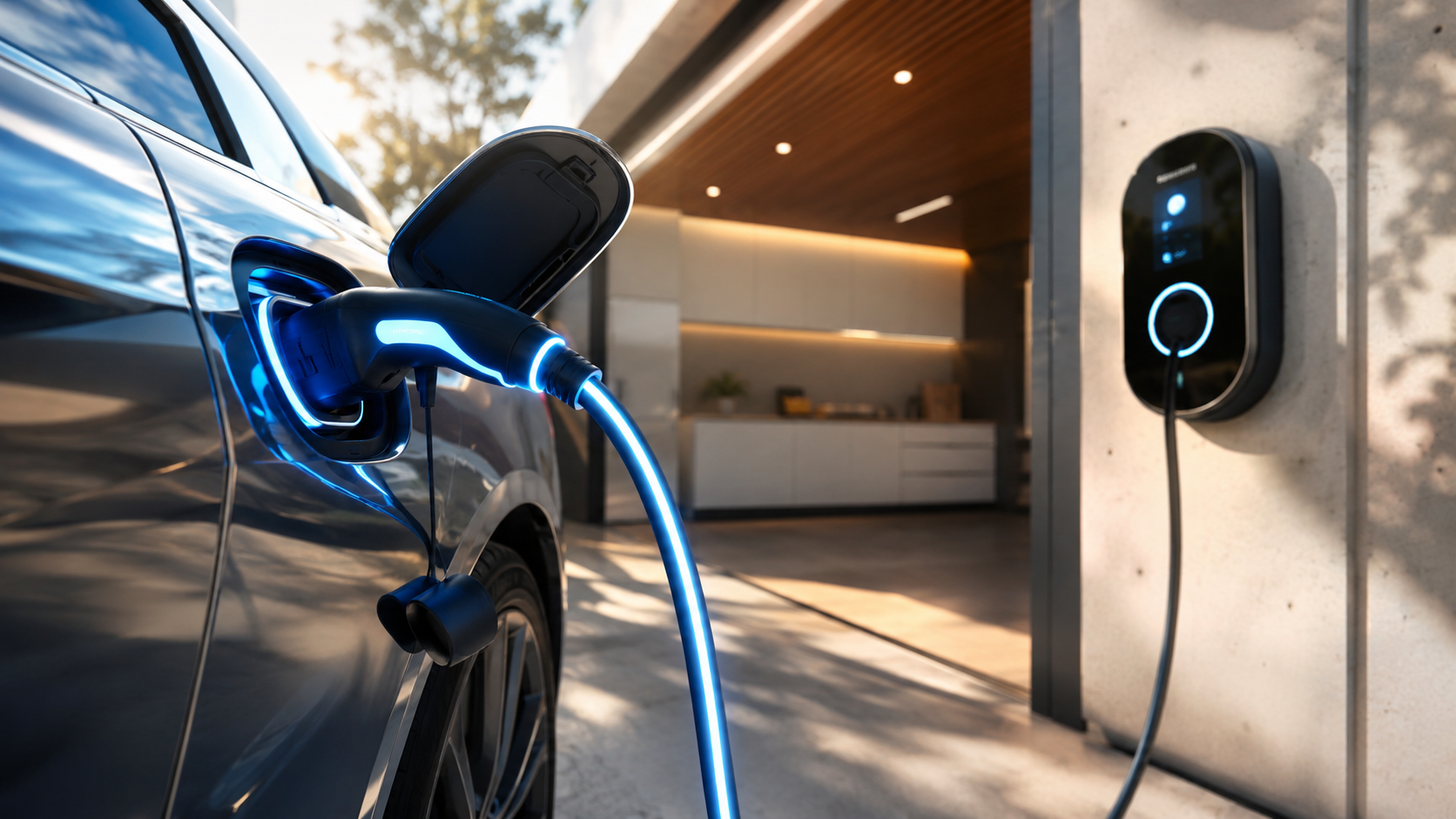
Plugging the car in at home completely changes the routine. The weekly trip to the petrol station disappears, replaced by the convenience of waking up to a car that is always “full”.



I didn't choose electric because of environmental convictions or because it was fashionable. In fact, I was rather sceptical. It was my everyday experience that gradually changed my mind.
Like many people, I didn't switch to electric overnight. At first, I had all the usual concerns: range anxiety on the motorway, uncertainty about managing charging and some apprehension about what an electric car would be like to live with every day. Going fully electric simply seemed unthinkable.
To make the transition gradually, I initially chose a hybrid. But everyday use quickly made its shortcomings obvious. It combined the disadvantages of a combustion car — an undersized and noisy combustion engine — with those of an electric car: a very small battery that couldn't provide meaningful electric range, combined with extremely slow charging.
Rather than buying a car based on an assumption, I decided to test the technology in real-world conditions for several weeks through a flexible subscription with Clyde.ch .
It was during this trial period that my preconceptions began to disappear. From the very first kilometres, the contrast with a combustion car was striking. Beyond the absence of local emissions, it was primarily the driving experience that changed everything: remarkable smoothness, relaxing silence, instant torque and the seamless feel of regenerative braking.
Switching to electric doesn't necessarily mean buying a car or committing to a long-term lease. To experience electric driving in real-world conditions without a major commitment, I chose a several-month subscription through Clyde.ch . The platform offers both new and used vehicles. I chose a used model with electricity included in the subscription, which gave me an affordable way to try a wide range of charging stations and networks throughout Switzerland as part of my everyday driving.
Beyond comfort, it was the economics and simplicity of everyday use that ultimately confirmed I had made the right choice.
Plugging the car in at home completely changes the routine. The weekly trip to the petrol station disappears, replaced by the convenience of waking up to a car that is always “full”.
While home charging offers unrivalled convenience, owning an electric car remains perfectly viable without it. Charging at work or making use of the public charging network can fit very naturally into everyday life.
They mainly require a change in habits. Charging becomes a planned break rather than a constant constraint. Over several hundred kilometres, stopping for 20 to 30 minutes every 250 to 300 km becomes a break that fits naturally into the rhythm of the journey.


Far from being driven by moralising arguments or grand theoretical principles, this transition was above all the result of a pragmatic decision.
I no longer see electric mobility as an environmental constraint, but as a form of mobility particularly well suited to my everyday life: more economical to run, infinitely more enjoyable to drive and perfectly aligned with today's needs.
As I discovered electric cars, I realised that finding numbers was easy — understanding which ones actually matter in everyday life was much harder.
WLTP range, battery capacity, charging power, charging time, consumption, boot space… the information is available, but it is often scattered or difficult to compare.
A website designed to make finding, comparing and understanding electric cars simple.