
1
kWh: the amount of energy
Battery capacity is measured in kilowatt-hours (kWh). It can be compared to the size of a fuel tank in a combustion-engine car: it indicates how much energy the battery can store.



Range, battery, charging, consumption, kW, kWh… Discover the essential concepts you need to understand, choose and use an electric car in everyday life.
These terms may sound technical, but the basic principles are simple. Three concepts are enough to understand the essentials.
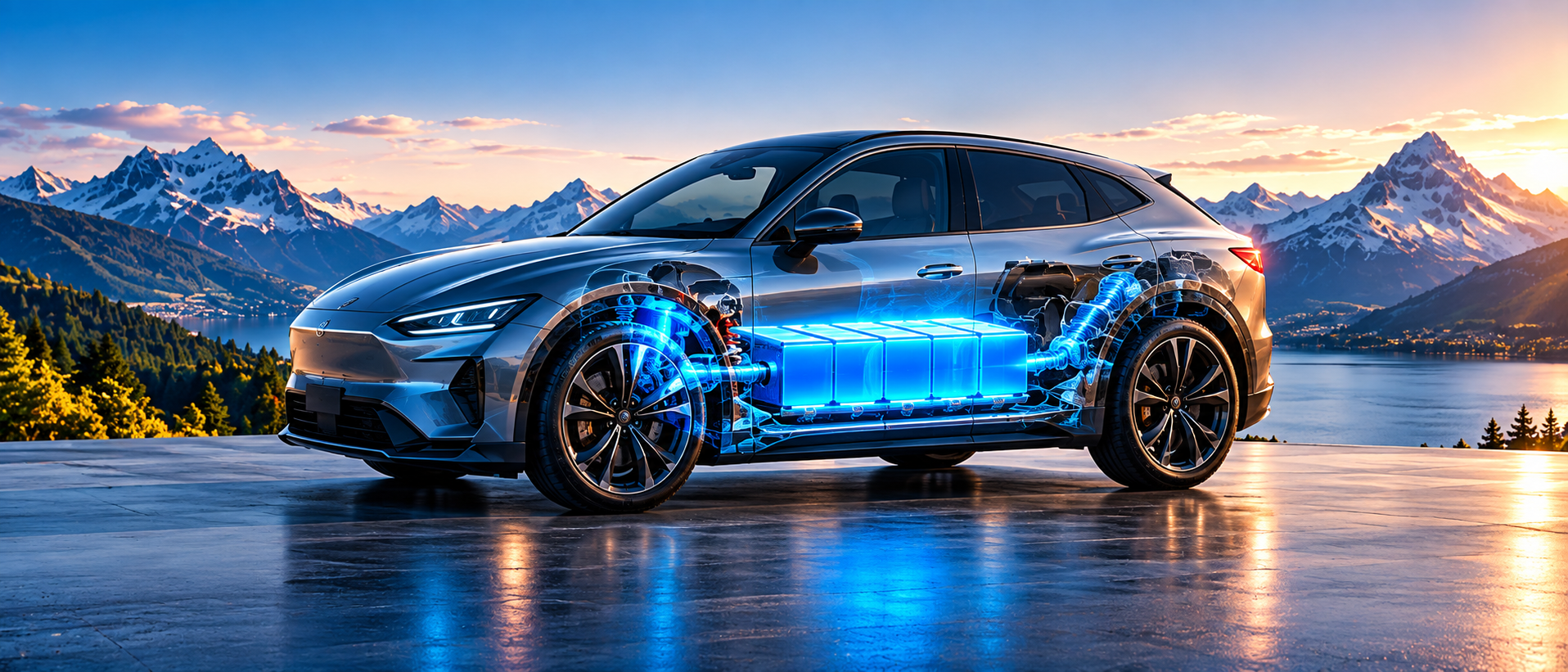
Battery capacity is measured in kilowatt-hours (kWh). It can be compared to the size of a fuel tank in a combustion-engine car: it indicates how much energy the battery can store.
A kilowatt (kW) measures power. When charging, it indicates both how much power a charging station can deliver and how much the car can accept.
This figure indicates how much energy is required to travel 100 kilometres. It is the electric equivalent of litres per 100 km.
At home, at work or on the motorway, the principle remains the same: transferring energy to the battery. The main differences are the available power and the type of current used.
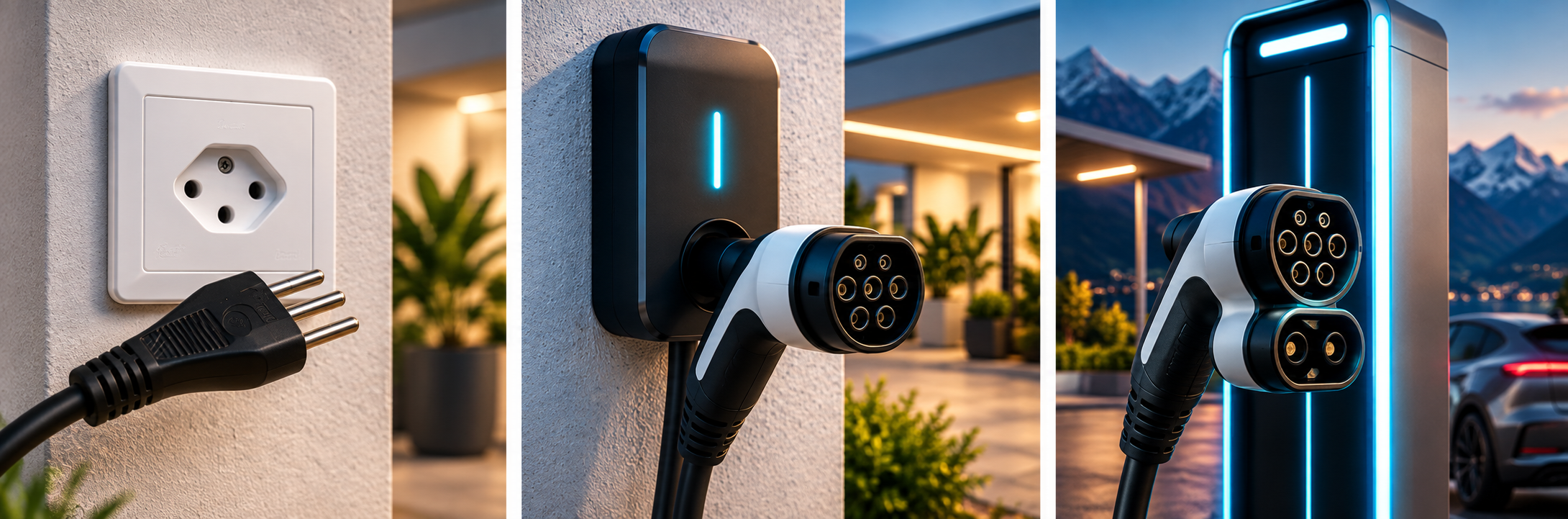
A slow charging solution, mainly suitable for occasional charging or when the vehicle remains parked for a long time.
The most common solution for charging at home, at work and at many public charging points. The maximum charging power depends, among other things, on the vehicle's onboard charger.
Primarily designed for journeys and long-distance travel. With DC charging, energy is supplied directly to the battery. The charging cable is generally attached to the charging station.
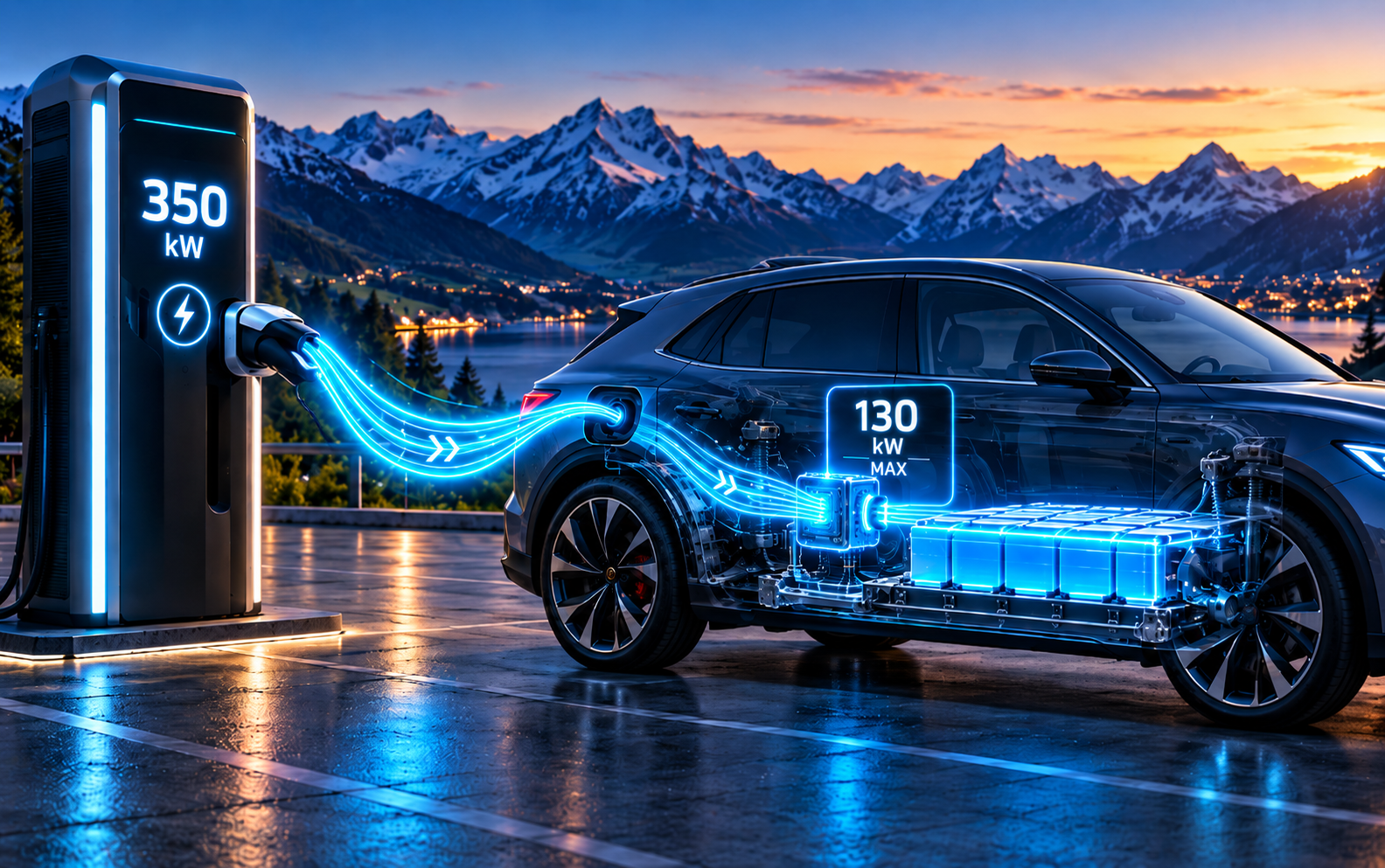
The charging station indicates the maximum power it can provide. The car determines how much power it can actually accept at any given moment.
The charging power can vary depending on the vehicle, the battery's state of charge and its temperature.
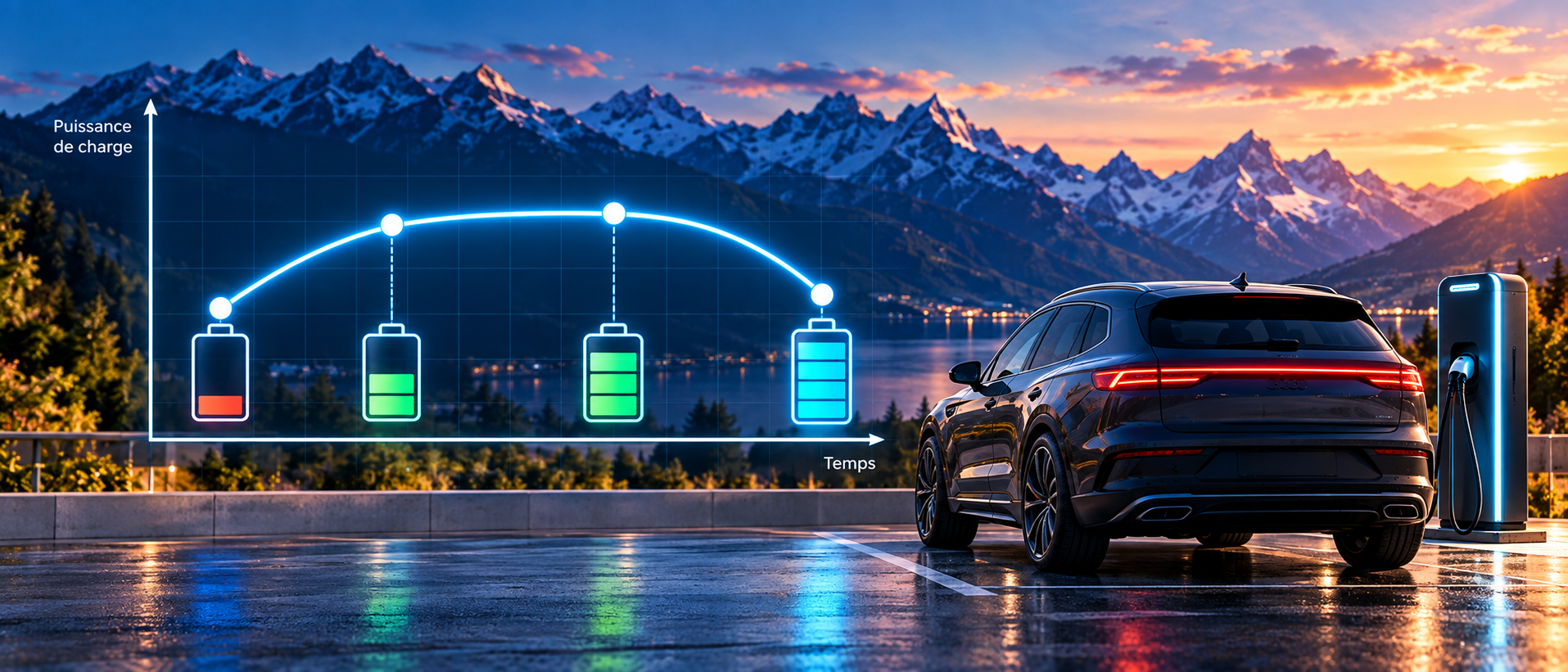
Low state of charge
When the battery has a low state of charge, the car can generally accept high charging power if conditions are favourable.
Optimal charging range
During part of the charging session, power can remain high and relatively stable.
Approaching 80%
As the battery fills, charging power will generally begin to decrease.
Approaching 100%
The final percentage points are generally much slower. This is one of the reasons manufacturers commonly quote a 10–80% charging time.
A battery needs to be within a suitable temperature range to accept high charging power. On vehicles equipped with battery preconditioning, selecting a rapid charging station in the built-in navigation system can allow the car to prepare the battery thermally while driving to the charger. This is particularly useful in cold weather.
Switzerland has an extensive network of public charging points. Depending on the charging station and service used, there are several ways to start and pay for a charging session.
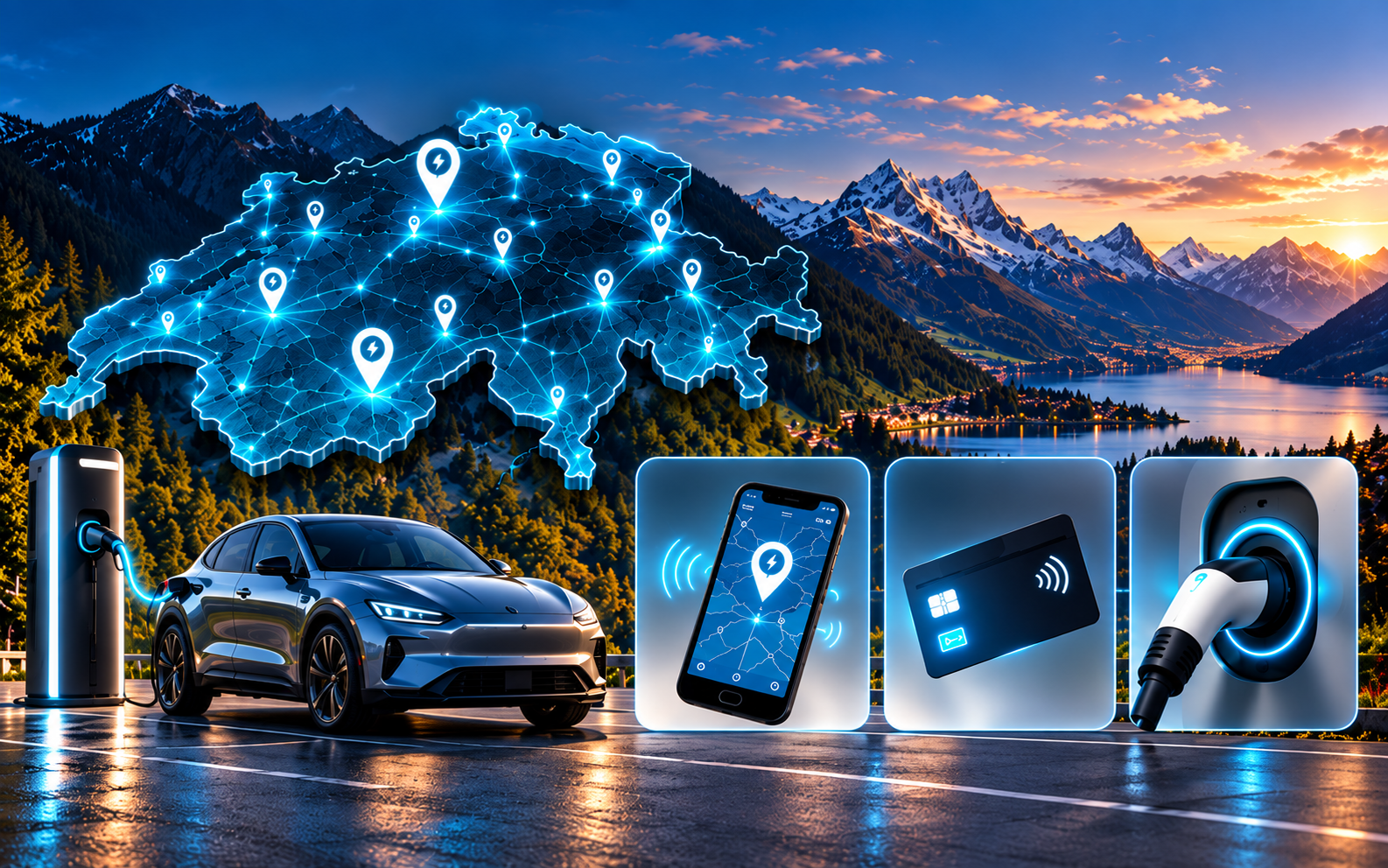
Many charging services provide an app that can be used to locate charging points, view available information and start a charging session.
An RFID card or tag can provide access to different charging networks, depending on the roaming agreements offered by the provider.
Some charging stations also allow direct payment without requiring a subscription beforehand.
With compatible vehicles, charging stations and contracts, Plug & Charge allows the vehicle to identify itself automatically once it is connected. Authentication and billing can then take place automatically through the charging contract configured for the vehicle.
On a long journey, charging simply becomes part of the trip. Built-in navigation systems and EV route planners can determine where to stop and how long to charge.

Simply enter where you want to go.
Depending on the system, the calculation may take into account energy consumption, battery level, terrain, temperature and available charging options.
The route planner can suggest which charging stations to use, the estimated battery level on arrival and how long you need to charge before continuing.
Switching to electric does not only change the way you refuel. It also changes several aspects of the driving experience.
When the vehicle slows down, the electric motor can recover some of the energy and return it to the battery.
On vehicles equipped with this function, lifting off the accelerator can produce strong deceleration and, depending on the system, may bring the vehicle to a complete stop in many situations.
An electric motor can deliver its torque very quickly, resulting in smooth and responsive acceleration.
An electric car does not require engine oil changes, spark plugs or an exhaust system. However, this does not mean it requires no maintenance. Tyres, brakes, filters, air conditioning and other components still need to be maintained according to the manufacturer's recommendations.
Motor vehicle tax varies from one canton to another. Different rules may apply to electric vehicles depending on the canton and vehicle. As reductions, exemptions and calculation methods can change, it is advisable to check the current rules directly with the relevant canton.
In cold weather, the range of an electric car can decrease. A cold battery operates less efficiently, while some of the available energy is also used to heat the passenger compartment and, depending on the vehicle, the battery itself.
The extent of the reduction depends on factors including the vehicle, outside temperature, type of journey, speed and use of the heating system.

The word frunk combines the English words front and trunk: a storage compartment located at the front of the vehicle.
The architecture of an electric car allows some manufacturers to free up space beneath the bonnet and use it as additional storage.
Its size varies considerably between models. Some electric cars do not have one at all, while others offer a substantial additional luggage compartment.
You now understand the key concepts: battery capacity, energy consumption, charging, range and everyday EV use. Auto Elec Compare lets you explore these specifications for electric cars available in Switzerland and compare them more easily.
Explore electric cars →